
How to Flush Sediment From Your Water Heater in Midland
Flushing a water heater means draining the tank through the drain valve to carry out the mineral sediment that…
Learn moreWater heaters rarely die without warning. They send signals for months, sometimes years, and homeowners who recognize them get to replace on their own schedule instead of during a flooding emergency.
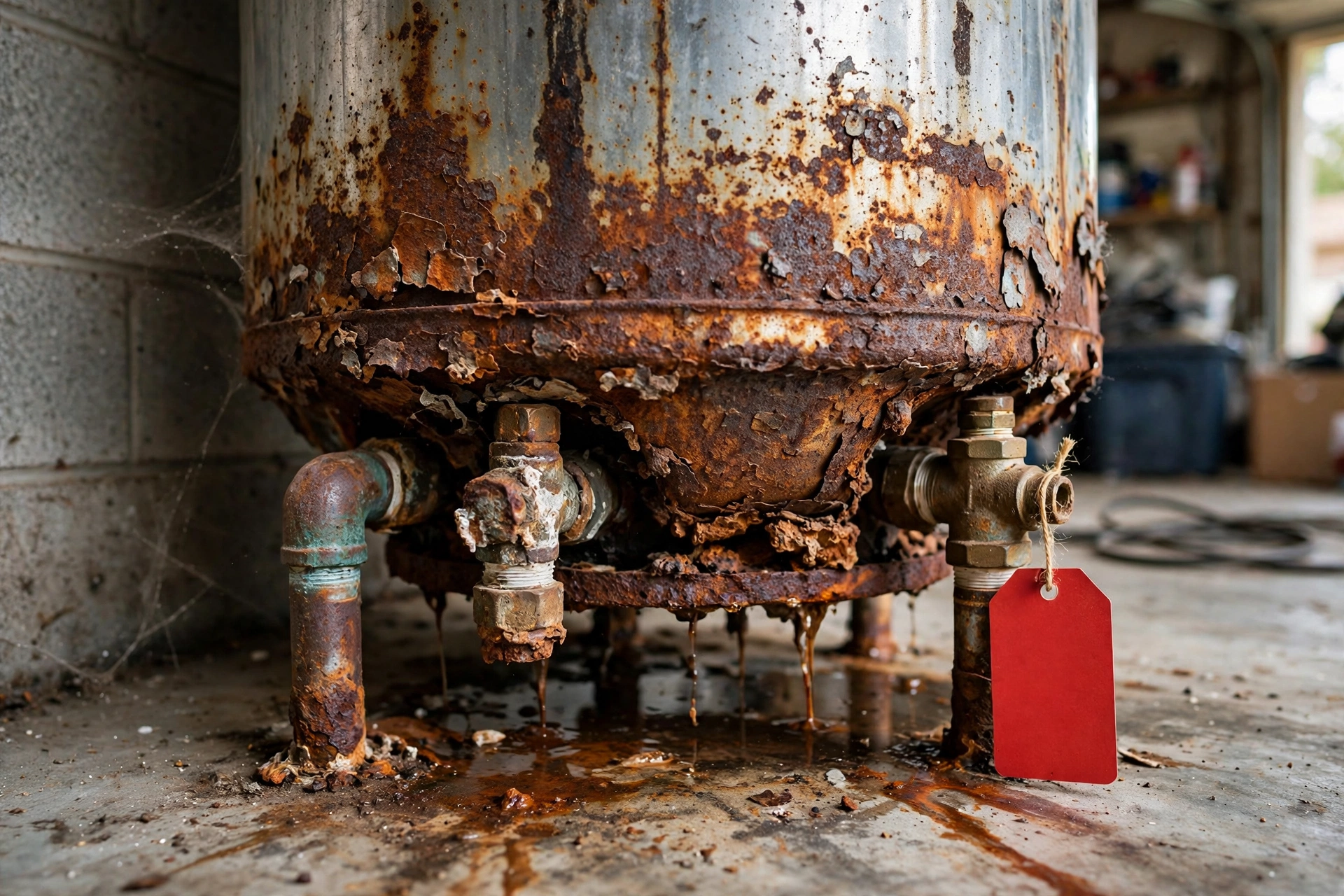
Here are the ten signs Midland homeowners see most, shaped by West Texas hard water and heat. If several of these sound familiar, read our guide on how long water heaters last in Midland to put your unit's age in context.
Count how many of these apply to your heater as you read. One sign is worth watching, two or three mean start getting quotes, and four or more mean the tank is living on borrowed time. Honest self-assessment now prevents a panicked decision later.
Age past 10 years is the first flag. Past that point every additional year is borrowed time, and repair money is usually better saved toward replacement. Rust-colored hot water is the second: it means the tank lining has failed and the steel is corroding.
Visible rust on the tank jacket, streaks running down from fittings, or corrosion around the base are the outside evidence of inside damage. Surface rust on a fitting can be innocent, but rust blooming across the jacket is not.
Decode the serial number to nail down the age instead of guessing. Most brands stamp the manufacture date into the first characters of the serial, and the format is printed in the manual or on the manufacturer's website. A unit you thought was 8 years old might be 12, which changes every decision downstream.

Rumbling, popping, or banging during heating means heavy sediment is boiling under a scale layer, a classic Midland hard water symptom. Our sediment flush guide can help early, but years of it harden the tank floor permanently.
Water pooling at the base or moisture that never dries signals a tank breach, which is an automatic replacement. Hot water that runs out faster than it used to, or takes much longer to reheat, means the heating system is losing the fight against scale and age.
Learn to distinguish normal sounds from warning sounds. Light ticking as the tank heats and cools is normal expansion. Deep rumbling, popping like popcorn, or banging is sediment boiling and stressing the tank. If flushing quiets it, you caught it in time; if the noise persists after a thorough flush, the scale has hardened permanently.
Do not ignore the relief valve discharge pipe when checking for leaks. A valve that drips constantly signals excess pressure or a failing valve, and either one deserves prompt attention. It is a safety device telling you something is wrong, not a nuisance drip to put a bucket under.
A heater fighting through sediment uses more energy for every gallon, and that shows up on utility bills. If bills climb while usage stays flat, an inefficient aging heater is a prime suspect.
Frequent repairs are the other economic signal. One element replacement on a 7-year-old tank is sensible maintenance. Three service calls in a year on an 11-year-old tank is money chasing a lost cause.
Use the simple rule: if the repair costs more than a third of replacement and the tank is past 8 years old, replace. If the tank body is compromised in any way, replace regardless of age. If the unit is young and the tank is sound, repair.
Our no hot water diagnostics guide helps sort out whether the problem is a component failure or the beginning of the end.
Get the assessment before the failure, not after. A scheduled replacement lets you compare options, check on efficiency upgrades, and book a convenient day. An emergency replacement compresses all of that into a few stressful hours while water dries on your floor. The decision rule works best when you apply it early.
Replacing before failure lets you choose the right unit instead of accepting whatever is available during an emergency. It is also the moment to consider upgrades: a larger tank for a growing family, a switch to tankless, or moving the unit out of a problem closet.
See our tank vs tankless comparison and closet retrofit guide to weigh the options, then schedule the swap at your convenience rather than the tank's.
Consider timing the replacement for a mild-weather month if you can. Installers book up fast during the first cold snap when old heaters fail in waves, and scheduling is easier before that rush. A planned swap in fall means you head into winter with a fresh unit and zero anxiety about the old one.
Keep the manual and warranty paperwork for the new unit where you can find them. When the next decade of maintenance questions comes up, having the model number and install date at hand makes every call faster and every decision easier.
 Want Water Heater Guidance for Your Home?
Read the guide, then describe your water heater problem and we will help arrange the next step.
Rust-colored hot water combined with age over 10 years. Together they mean the tank is corroding from the inside and replacement is near.
Early sediment noise often improves with flushing. Years of rumbling that flushing does not fix means permanent scale damage, and replacement is the answer.
You can run it until it fails, but failure often means flooding. Planning the replacement beats reacting to it, especially with hard water wear.
Rarely. At that age a repair buys little time, and the money is better applied to a new unit with a fresh warranty.
Flushing a water heater means draining the tank through the drain valve to carry out the mineral sediment that…
Learn more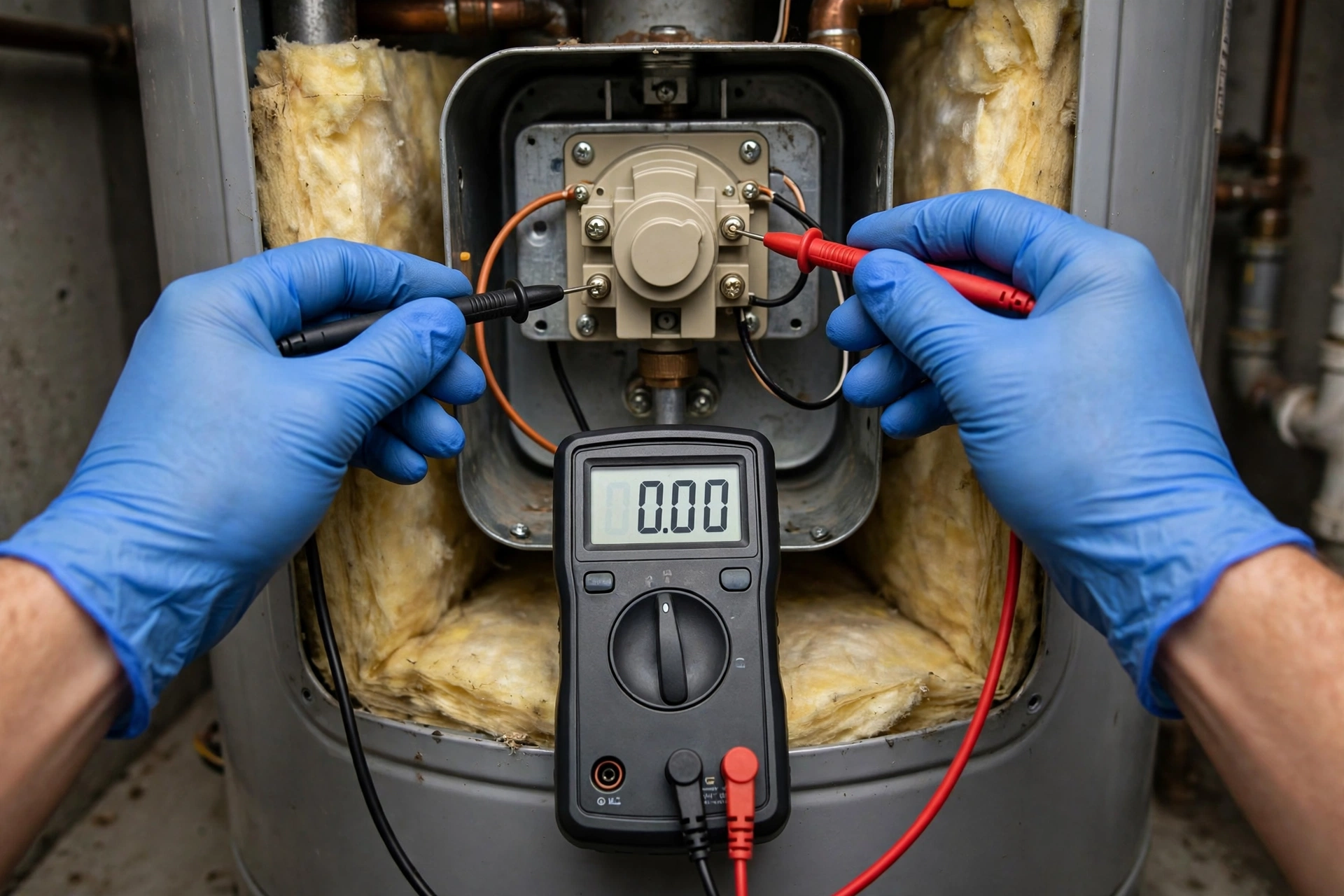
The most common reasons for no hot water are a tripped breaker, a failed heating element, a worn-out thermocou…
Learn more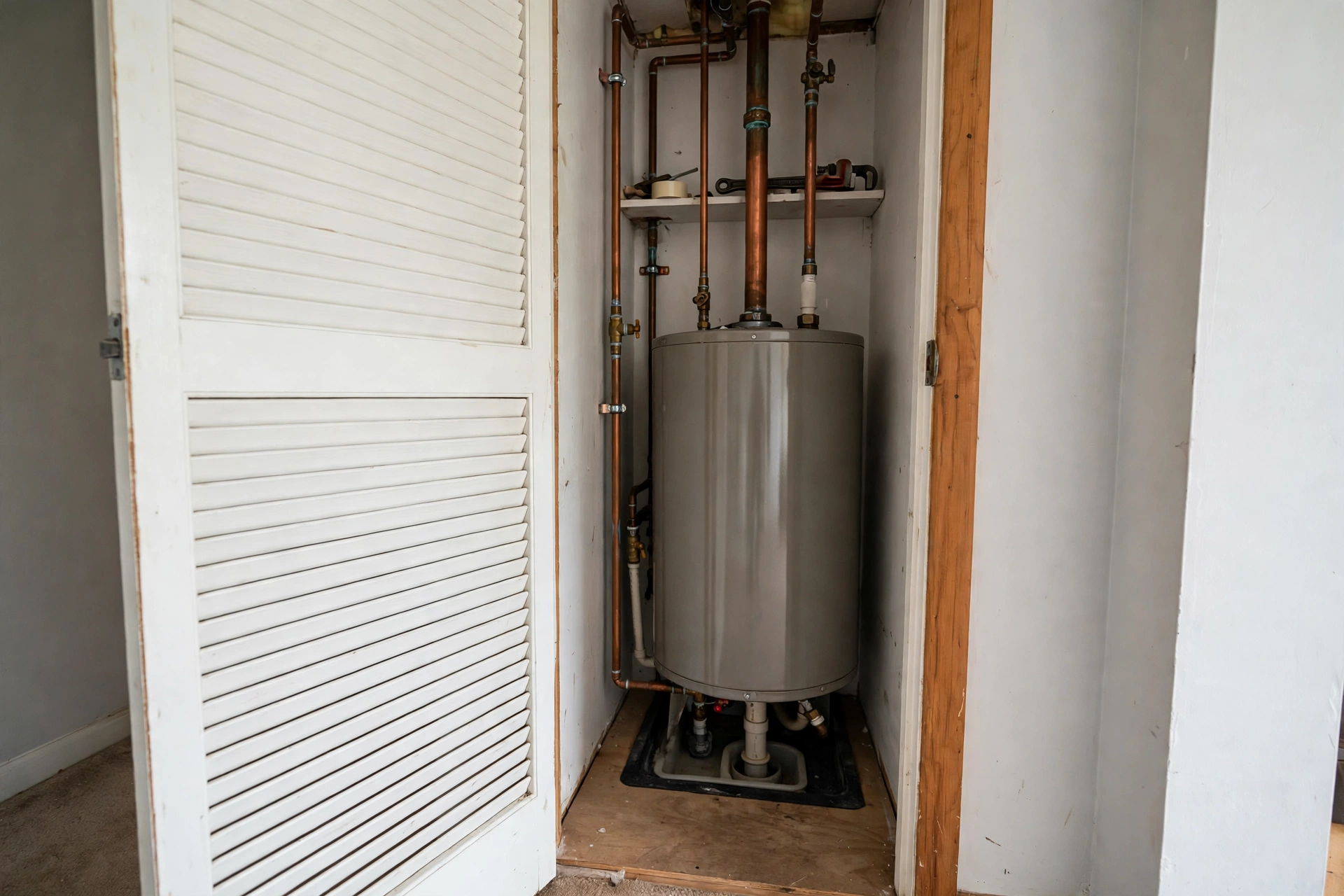
Many older Midland homes have water heater closets built for smaller, shorter units than what is sold today, w…
Learn moreHot Water, HandledThe clearest signs you need a new water heater are age over 10 years, rust-colored hot water, rumbling sediment noise, visible tank corrosion, and water pooling at the base. In Midland, hard water accelerates most of these, so local units often show wear earlier. Our water heater installation page explains what replacement involves.