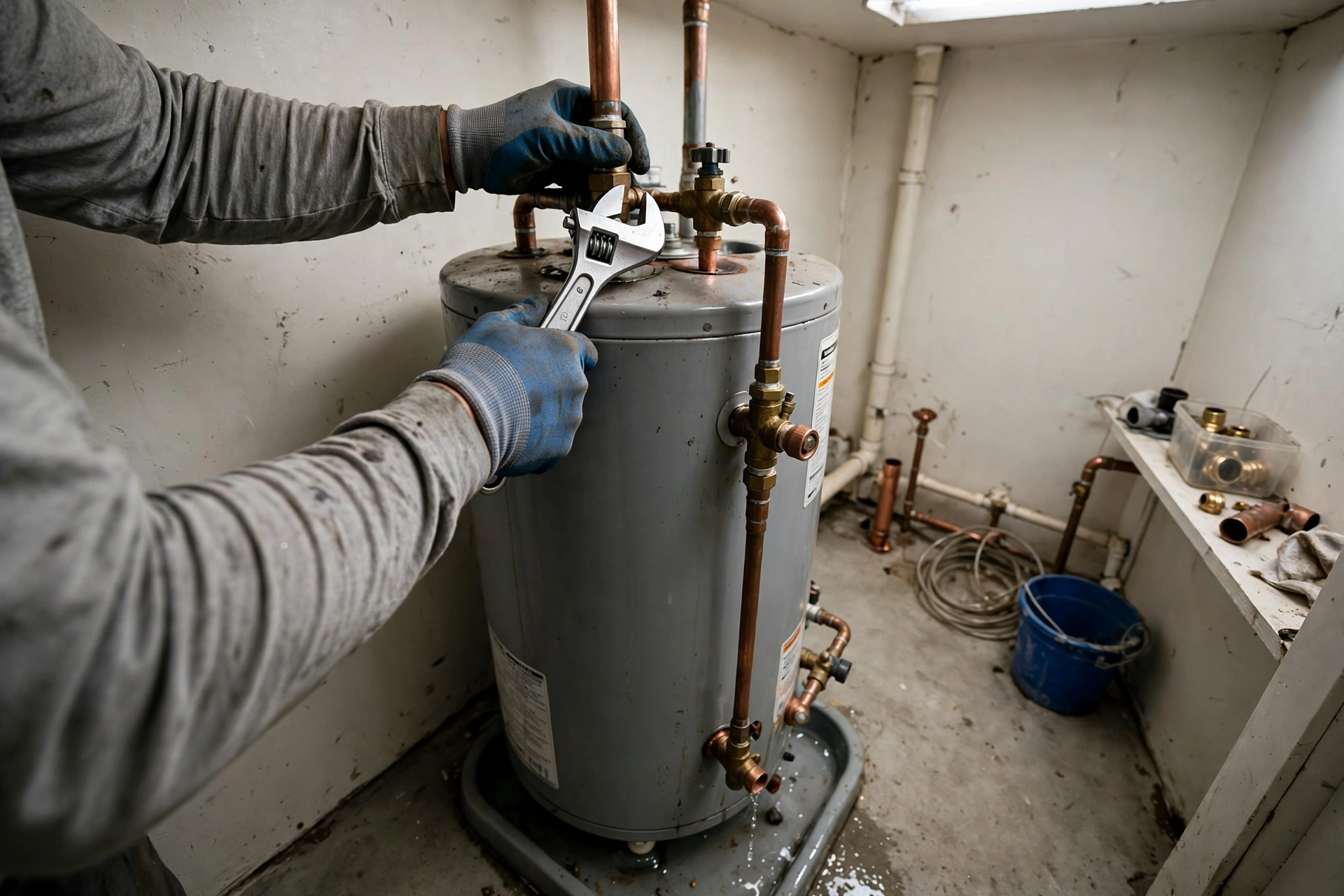
Water Heater Troubleshooting
Midland Water Heater Pros connects you with independent contractors who repair gas and electric water heaters …
Learn moreEvery plumber in the Permian Basin tells the same story: the water heater that died at eight years old with six inches of sediment in the bottom and an anode rod that dissolved years ago. Then they tell the other story: the fifteen-year-old tank still going strong because somebody flushed it every year and replaced the rod when it wore out. Same city, same 15 to 25 grains per gallon water, wildly different outcomes. The difference is maintenance.
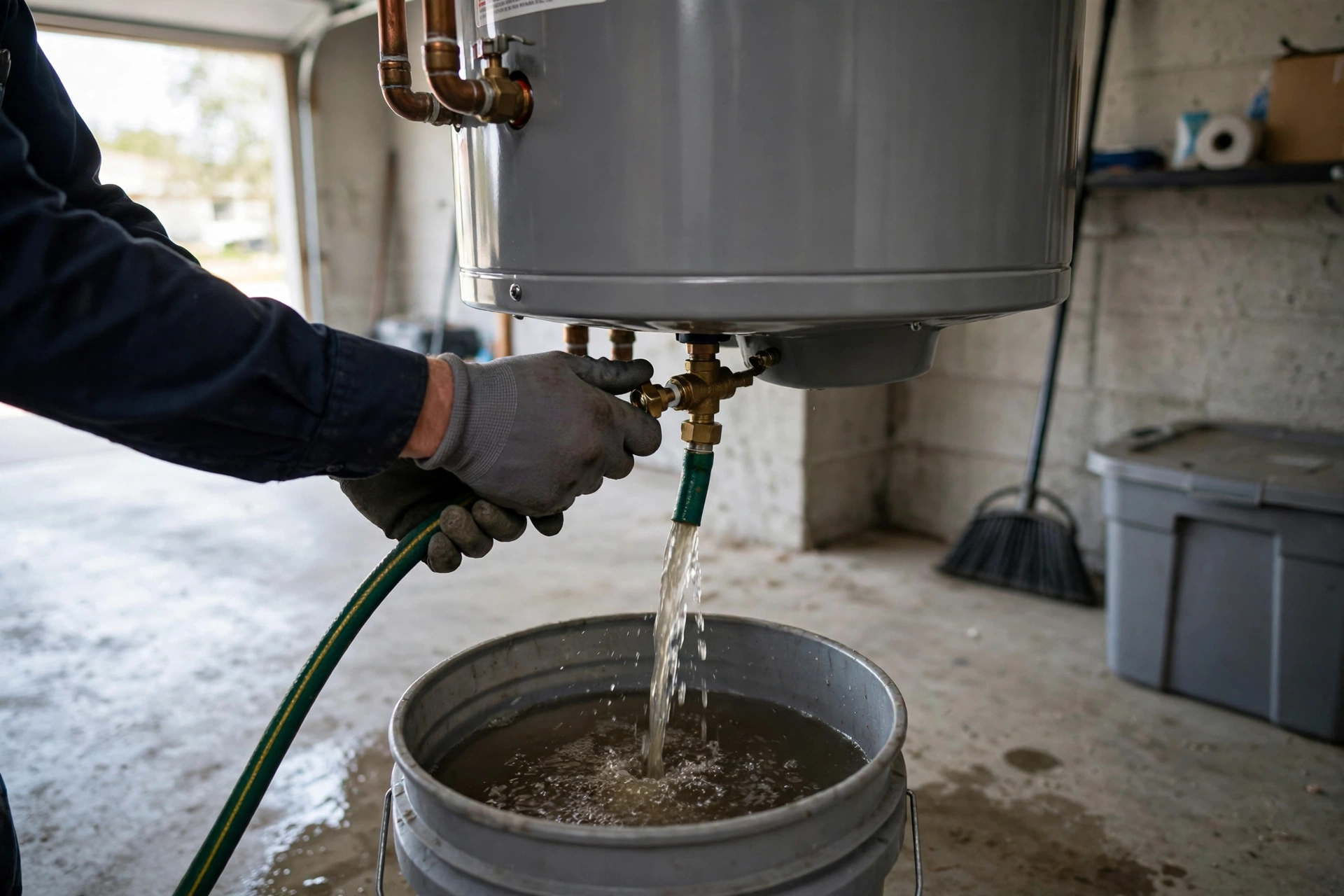
Water heater maintenance is unglamorous work, which is exactly why it gets skipped. Nothing dramatic happens during a flush. The anode rod does its job silently. The relief valve sits there year after year, hopefully never needed. But each of these quiet components is what stands between your tank and the mineral load that Midland water delivers with every gallon. Neglect them and the tank pays the price.
This page explains what proper maintenance includes, why each step matters specifically in hard water, what a maintenance visit looks like, and how landlords and busy households across Midland keep their units on schedule.
Flushing is the single highest-value maintenance a Midland water heater can receive. The process is simple in concept: the contractor connects a hose to the drain valve, opens it, and lets water carry accumulated sediment out of the tank. In practice, it takes someone who has done it hundreds of times, because sediment in hard water tanks does not always flow willingly. Stubborn buildup sometimes needs the tank agitated, the valve worked back and forth, or in bad cases, a more thorough cleaning approach.
What comes out tells a story. A little cloudy water with fine grit is normal for a maintained tank. Thick, sandy sludge means flushing was overdue. Contractors in Midland are used to seeing the latter, because most tanks in the Permian Basin have never been flushed at all. The first flush on a neglected tank makes the biggest visible difference, and it often quiets rumbling noises immediately as the sediment layer thins.
Yearly is the right rhythm for 15 to 25 grains per gallon water. Some households stretch to eighteen months without trouble, but beyond that the sediment layer rebuilds enough to start insulating the tank bottom again. The visit is quick, the tank runs quieter and more efficiently afterward, and every flush buys the tank more life. There is no maintenance task with a better return.
Related: repairing sediment-damaged units, when flushing comes too late
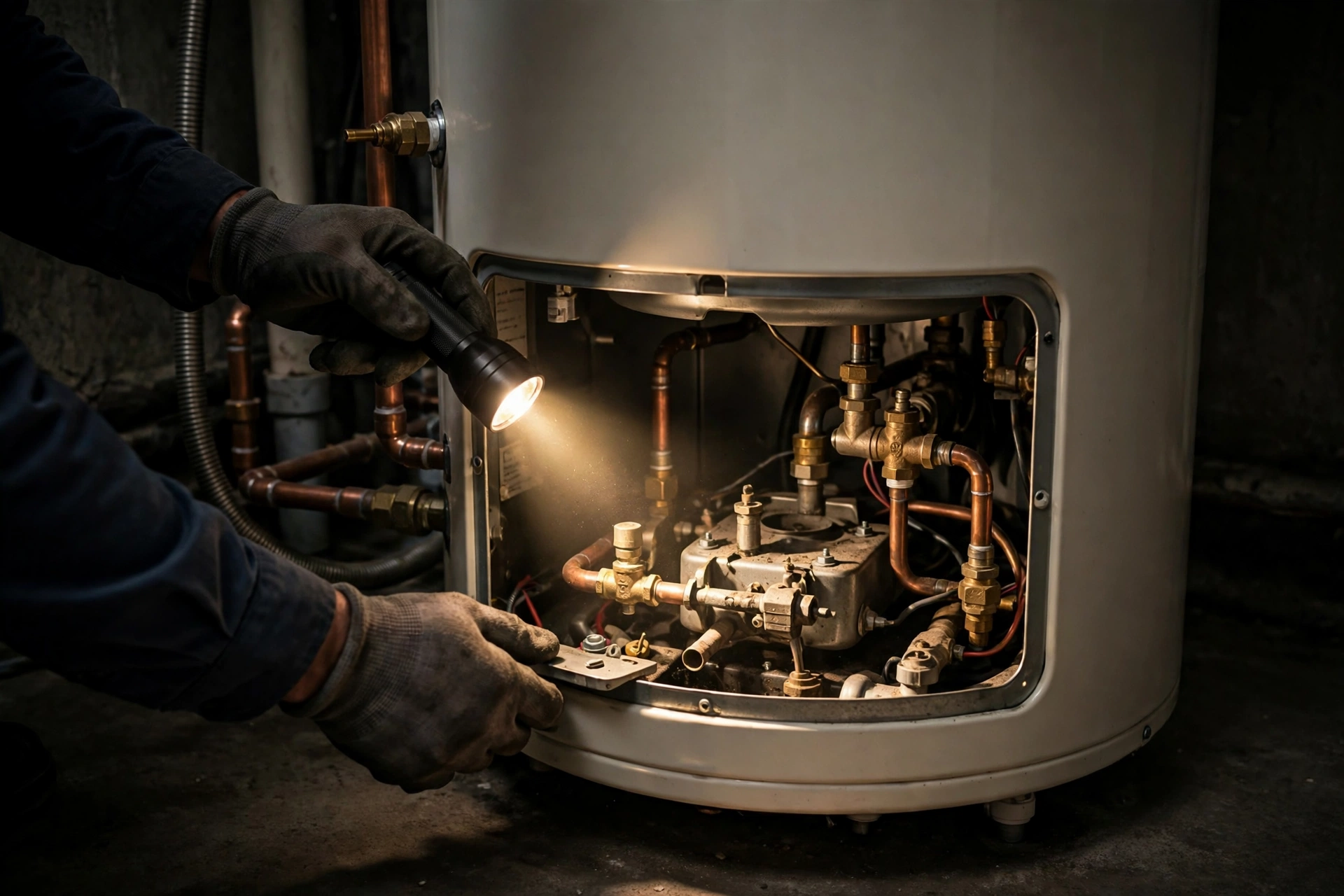
The anode rod is the most important part of your water heater that you have never seen. It is a metal rod, usually magnesium or aluminum, suspended inside the tank from the top. Through a bit of electrochemistry, it corrodes preferentially, meaning it rusts away so the steel tank does not have to. As long as the rod has life left, the tank is protected. When the rod is gone, the tank starts corroding instead.
In Midland's aggressive water, anode rods deplete faster than in soft water cities. A contractor checks the rod by removing it and inspecting how much sacrificial metal remains. A rod worn down to its steel core wire, or coated in calcium to the point where it cannot function, needs replacement. This check belongs in every maintenance visit after the first couple of years, because rod life is the real clock your tank runs on.
Replacing a depleted rod is one of the most cost-effective services in all of water heater care. It directly extends tank life by restoring the corrosion protection the tank was designed around. Many premature Midland tank failures are, at root, anode rod failures that nobody noticed until the tank itself started leaking.
Related: anode rod replacement service, new installations with quality rods
The temperature and pressure relief valve, the TPR valve, is your water heater's last line of defense. If the thermostat fails and the tank overheats, or pressure builds beyond safe limits, this valve opens and discharges water to prevent a catastrophic failure. It is a simple, inexpensive device doing a critical job, which is why contractors test it at every maintenance visit by lifting the lever briefly and confirming water flows, then stops cleanly.
A valve that drips constantly, will not open when tested, or will not reseat afterward needs replacement. These are not rare findings in Midland, because years of thermal cycling and mineral exposure wear the valve's internals. Replacement is quick, and it restores the safety margin the unit was built with.
The expansion tank gets checked alongside it. This small tank absorbs the pressure increase that happens when water heats and expands in a closed plumbing system. Contractors check its air charge with a gauge and confirm the bladder has not failed. A waterlogged expansion tank cannot do its job, and the resulting pressure spikes stress every component in the system, from the relief valve to your home's supply lines.
A proper maintenance visit follows a checklist, not a whim. The contractor starts with a visual inspection of the unit and its surroundings: checking for moisture, corrosion on fittings, and proper clearances. Then comes the flush, draining sediment from the tank through the drain valve until the water runs clear. The anode rod gets inspected, and the relief valve gets tested.
On gas units, the visit includes burner inspection and cleaning, pilot assembly check, and venting verification, because West Texas dust accumulates in burner assemblies faster than most homeowners realize. On electric units, elements and thermostats get tested, and wiring connections get checked for heat damage or looseness. The thermostat setting gets confirmed at 120 degrees, and the expansion tank's charge gets verified.
The visit ends with a plain-language report: what was done, what was found, and what to watch. If the anode rod is halfway gone, you hear that it has a year or two left, not a sales pitch. If sediment was heavy, you hear that yearly flushing matters even more for your unit. Good maintenance is as much about information as it is about the work itself.
Related: gas unit maintenance details, electric unit maintenance details
Midland's rental market, driven by the oilfield economy, creates a special maintenance challenge. Rental homes change tenants, landlords live out of town, and water heaters quietly accumulate sediment for years between anyone paying attention. Property owners along the Loop 250 corridor and in the neighborhoods around downtown see this pattern constantly: a tenant reports no hot water, and the contractor finds a tank that has not been serviced in a decade.
The solution is scheduled maintenance that does not depend on anyone remembering. Landlords and property managers can put every unit on an annual rotation, with the contractor handling access coordination and delivering a condition report after each visit. That report becomes a planning tool: a rod with a year left, a valve starting to weep, a tank approaching the age where replacement should be budgeted. Surprises turn into scheduled work.
Busy owner-occupied households benefit from the same rhythm. Oilfield schedules make it easy to let home maintenance slide for a year, then another. An annual visit takes less than an hour of your attention and protects an appliance that would cost far more to replace early. In a hard water city, maintenance is not fussiness. It is the difference between a tank that lasts and one that does not.
Related: planning eventual replacement, tankless descaling service
 Water Heater Maintenance Questions?
Describe what your unit is doing and we will help arrange the next step.
Yearly flushing is the right rhythm for Midland's 15 to 25 grains per gallon water. That schedule keeps sediment from building into the thick layer that insulates the tank bottom, overheats components, and shortens tank life. Tanks that have never been flushed benefit the most from the first service, which often quiets rumbling immediately.
The anode rod is a sacrificial metal rod inside the tank that corrodes so the steel tank does not have to. It is the tank's primary defense against rust. In Midland's aggressive water, rods deplete faster than elsewhere, so checking the rod every couple of years and replacing it when worn is one of the most effective ways to extend a tank's life.
Lift the lever on the temperature and pressure relief valve briefly and let it snap back. You should hear water discharge through the drain line, then stop completely. If nothing flows, if it keeps dripping afterward, or if the valve looks corroded, have it replaced. This is a safety device, so a failed test deserves prompt attention from a contractor.
Yes, and the effect is largest in hard water cities like Midland. Annual flushing prevents the sediment damage that kills most local tanks early, and anode rod replacement maintains the corrosion protection the tank was designed around. Contractors here regularly see maintained tanks outlast neglected ones by many years. It is the least expensive life extension available.
A full visit includes tank flushing, anode rod inspection, relief valve testing, expansion tank check, and thermostat verification, plus burner and venting service on gas units or element and wiring checks on electric units. You receive a plain-language report on what was found and what to watch, so future work is planned rather than surprising.
Not seeing your question? Request service and describe what your unit is doing.
Call (432) 321-0116Midland Water Heater Pros connects you with independent contractors who repair gas and electric water heaters …
Learn more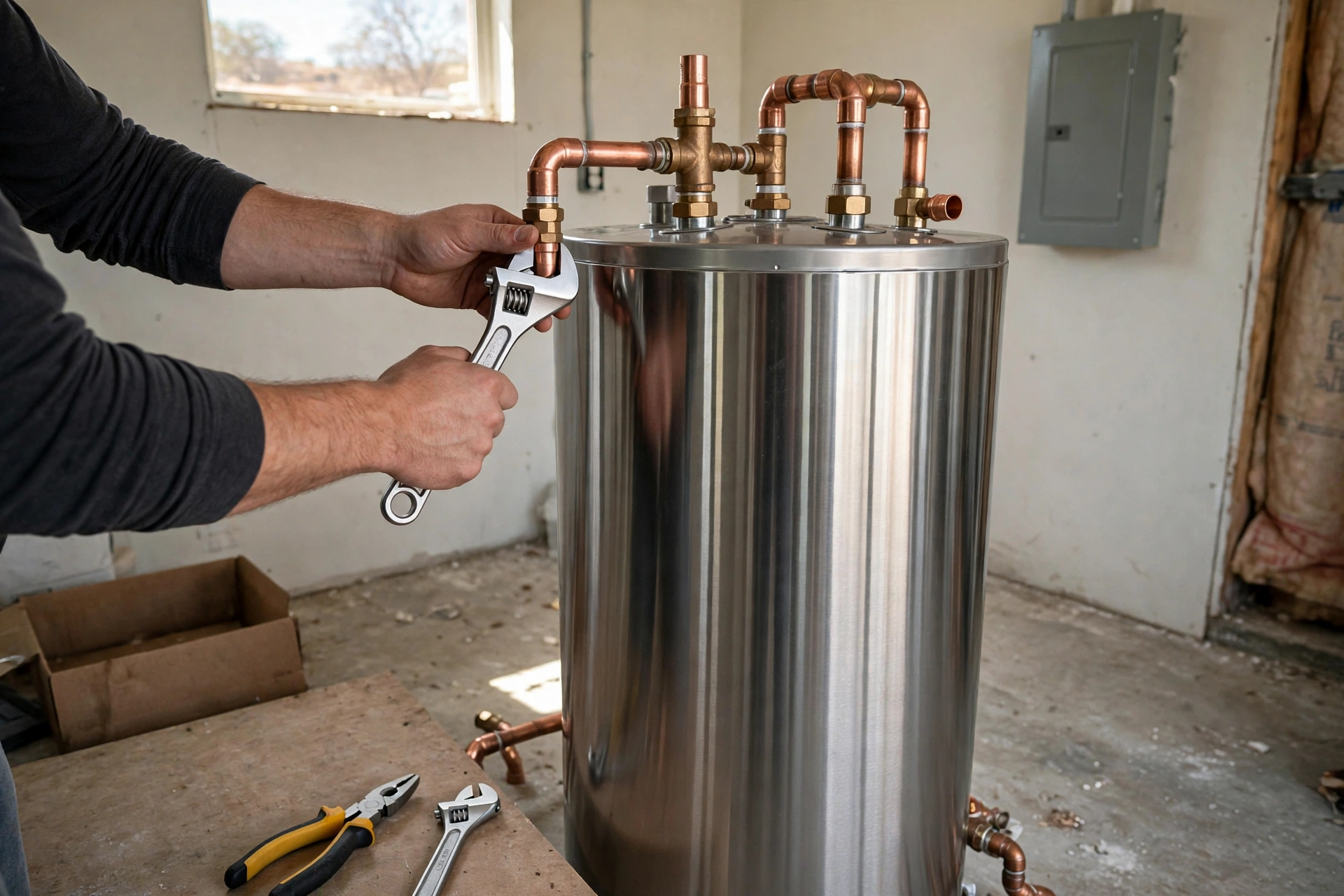
A water heater installation is a decision you will live with for years, so sizing and setup matter more than b…
Learn more
Every water heater reaches a point where another repair just delays the inevitable. Midland Water Heater Pros …
Learn moreHot Water, HandledIn a city where tap water carries 15 to 25 grains of hardness per gallon, maintenance is not an optional extra, it is the main event. Midland Water Heater Pros connects homeowners with independent contractors who perform annual water heater maintenance across Midland: full tank flushing, anode rod inspection, relief valve testing, and burner or element checks. Skipped maintenance is the single most common reason Midland tanks fail years early.