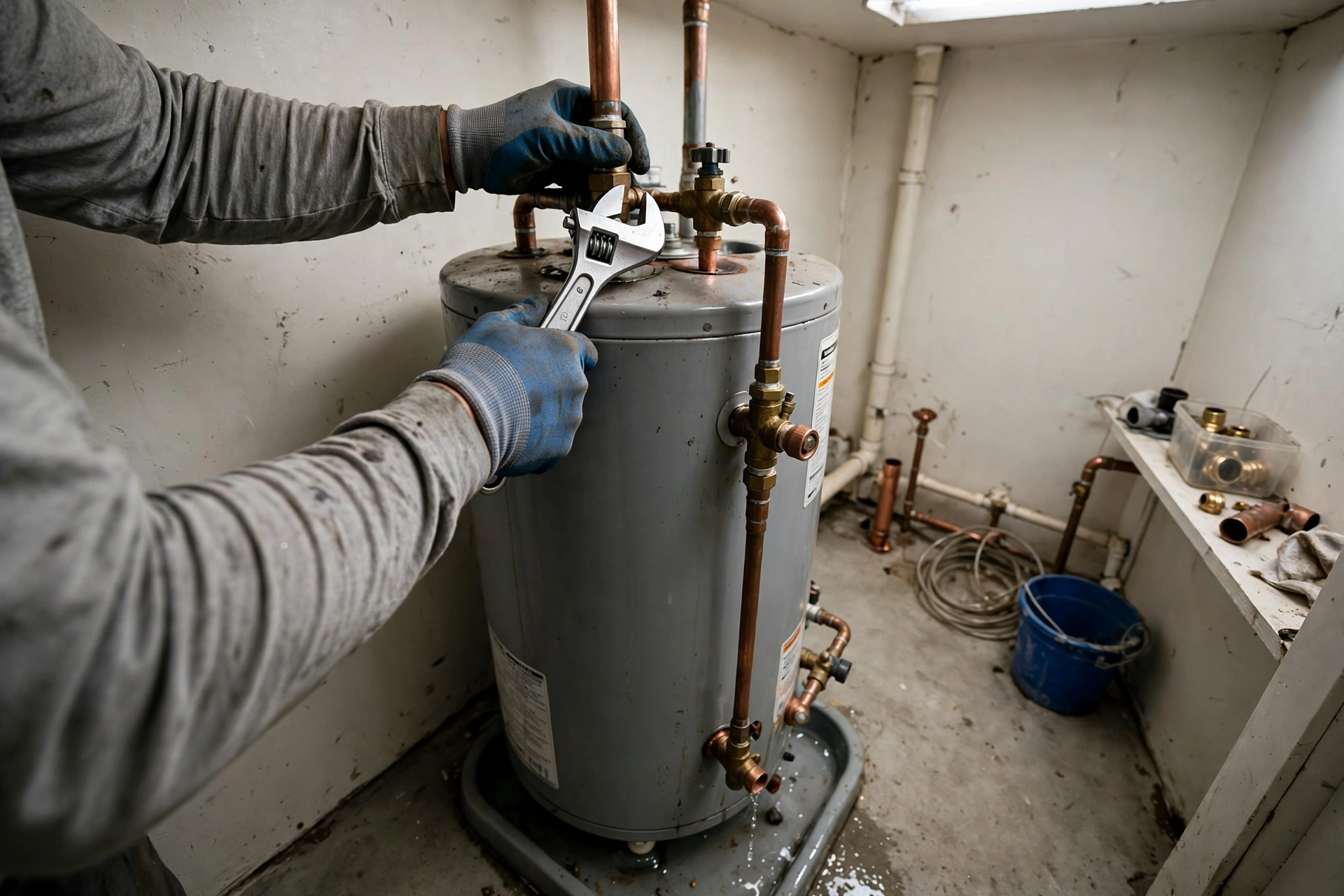
Water Heater Troubleshooting
Midland Water Heater Pros connects you with independent contractors who repair gas and electric water heaters …
Learn moreNobody looks forward to replacing a water heater, but there is a strange upside to it: replacement is the one moment when every compromise baked into the old installation can be corrected. The undersized tank that never kept up with your teenagers. The closet install with no drain pan that has been a flood waiting to happen since the 1960s. The unit that never got flushed once in twelve years. All of it can be fixed in a single visit.
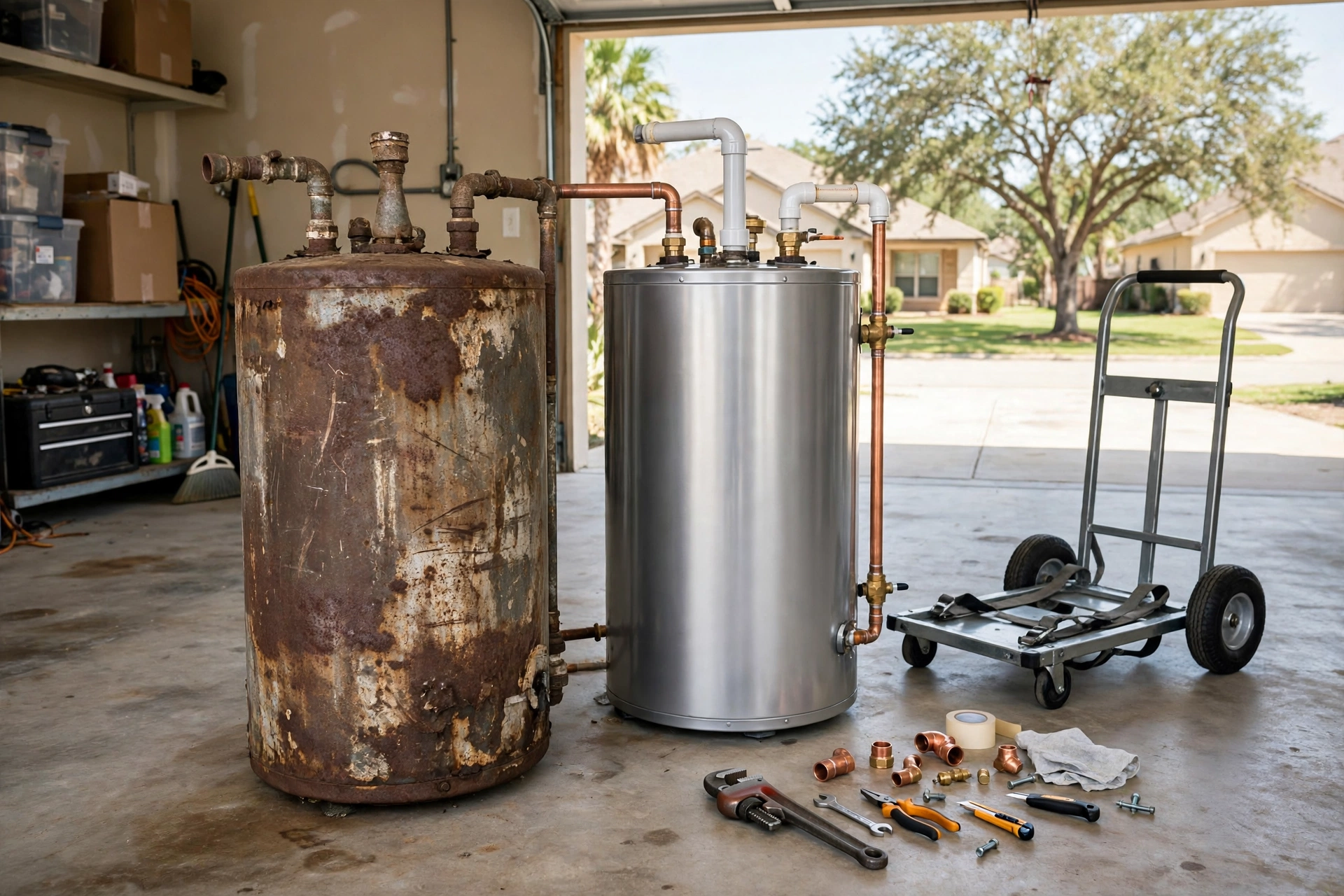
In Midland, the replacement conversation almost always starts with hard water. At 15 to 25 grains per gallon, mineral buildup is the reason most local tanks die young, and it is the reason the replacement needs protection the old one never had. Contractors across the Permian Basin see the same story weekly: a tank that could have lasted years longer with annual flushing, now leaking from the bottom because sediment insulated the tank floor until it overheated and failed.
This page covers how to tell when replacement beats repair, the special challenge of Midland's mid-century closet tanks, how to choose the right new unit, what happens to the old one, and how to break the cycle of premature replacement that hard water creates.
The repair versus replace decision comes down to three questions: how old is the unit, what failed, and what condition is the tank in. A ten-plus-year-old tank with a leaking tank body is not a repair candidate, period. A six-year-old tank with a failed element and a healthy anode rod is an easy repair. The gray area in between is where an honest contractor earns trust, by showing you the tank's actual condition instead of just quoting the cheaper or the pricier option.
Watch for the pattern of escalating repairs. One element replacement is normal maintenance. An element, then a thermostat, then a relief valve, all within a year, signals a tank in systemic decline, usually driven by sediment and corrosion that no single part swap will reverse. At that point, each additional repair buys months while a replacement buys years.
Age matters more in Midland than in soft water cities. The same hard water that every local plumber warns about compresses tank lifespans, so a twelve-year-old Midland tank has lived a harder life than a twelve-year-old tank elsewhere. Factor local water into the decision, not just the calendar.
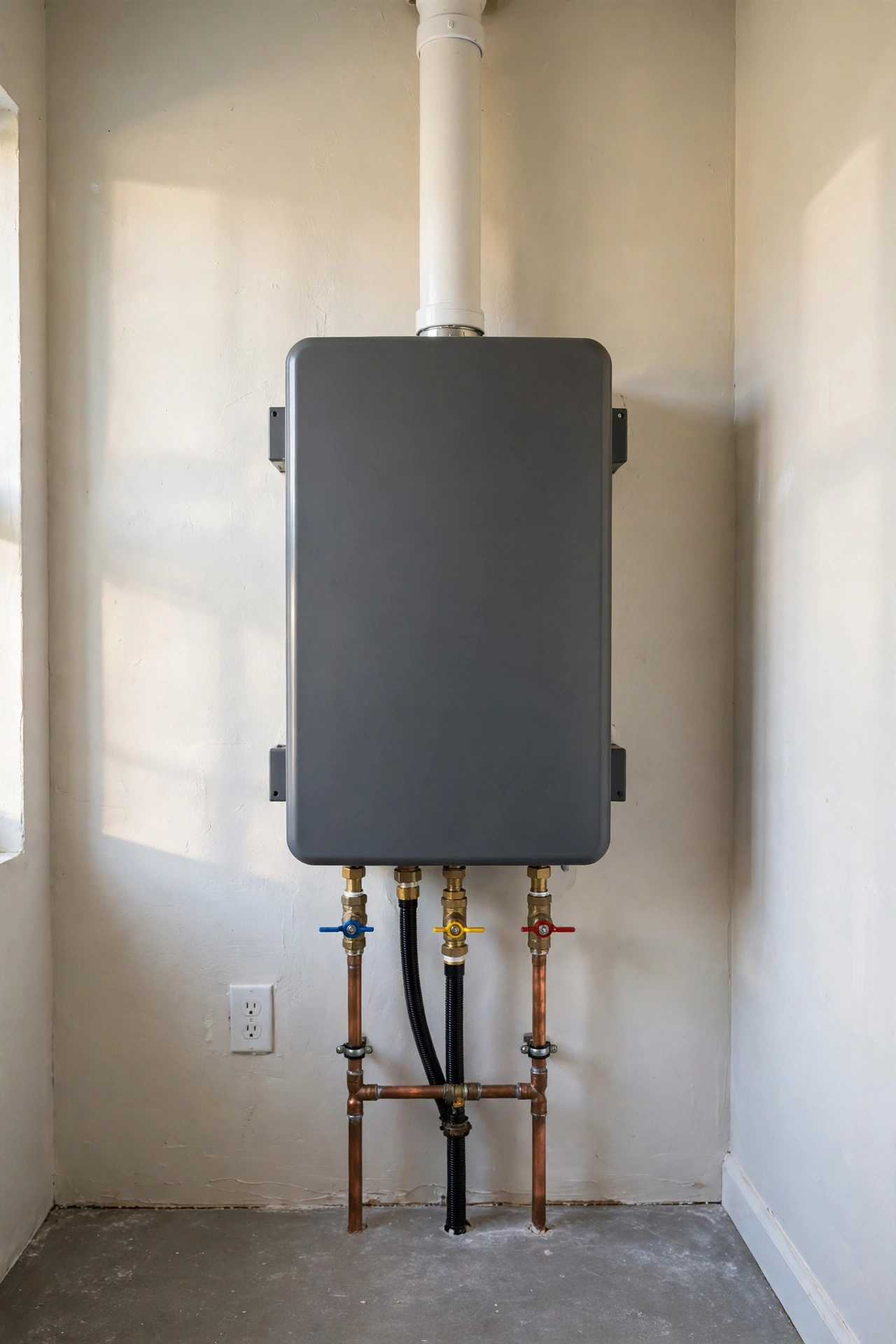
Midland's oil boom built thousands of homes in the 1950s and 1960s, and a remarkable number of them still hide their water heater in a hall closet or a cramped utility nook. Those closets were designed around the tanks of the era: smaller, shorter, and installed under looser requirements. Dropping a modern unit into the same space often runs into clearance, combustion air, and venting issues that did not exist when the house was built.
Downtown Midland and the older neighborhoods inside the Loop 250 corridor are full of these installs. The contractor's job is to survey the space before promising anything: measuring clearances, checking combustion air pathways for gas units, and confirming the vent route is still sound. Sometimes the existing closet works fine with minor modifications like louvered doors. Sometimes the smart move is relocating the unit to the garage during replacement, when the plumbing is already being reworked.
This is also where drain pans prove their worth. Many of these older closet installs never had a pan, which means a leak runs straight into flooring and walls. Replacement is the natural moment to add one, along with a drain line that actually goes somewhere. It is inexpensive insurance against the most common water heater disaster.
Related: installation and placement planning, gas unit venting requirements
Start with fuel type. If your home has natural gas service and the venting is sound, staying with gas is usually the path of least resistance. Homes without gas, including many in Greenwood and Gardendale on the outskirts, do well with electric units. Switching fuels is possible but adds electrical or gas line work, so it should be driven by a real reason, like chronic dissatisfaction with recovery time, not just curiosity.
Next comes size, and this is where you fix the old unit's mistakes. If the old 40 gallon tank never kept up, say so plainly and size up. If it was just two of you and now it is six, the math has changed. The contractor will run through your peak demand and recommend gallons and recovery rate, or flow rate for tankless, that match your household as it is today.
Finally, think about longevity features rather than brand prestige. A quality anode rod, a full-port brass drain valve for easy flushing, and an expansion tank where needed do more for a Midland tank's lifespan than any badge on the jacket. In 15 to 25 grains per gallon water, the unit that is easiest to maintain is the unit that lasts.
Related: considering tankless instead, electric unit options
A replaced water heater does not just vanish. The contractor drains it fully, which takes longer than most homeowners expect when sediment has been accumulating for a decade, then disconnects and removes it from your home. Tanks are heavy, awkward, and often wedged into tight spaces, which is one more reason replacement is a job for someone who does it regularly.
Old tanks are typically hauled away for scrap recycling. The steel shell, copper, and brass fittings all have scrap value, and established contractors have recycling relationships that keep these units out of landfills. If you have a preference about the old unit, mention it before the work starts, but most homeowners are simply glad to see it go.
One practical note: if the old tank failed by leaking, check the surrounding area once it is removed. Water may have been seeping longer than you realized, and the subfloor or wall base behind a closet install can hide damage. A thorough contractor will flag anything suspicious they see once the old unit is out of the way.
Related: what installation day involves, urgent replacement help
Some Midland homeowners feel like they replace water heaters far too often, and they are usually right. The cycle goes like this: install a new tank, never flush it, watch sediment accumulate in 15 to 25 grains per gallon water, replace the burned-out elements once or twice, then replace the whole tank years early when the bottom fails. Then repeat. Every plumber in the Permian Basin has watched this loop run in home after home.
Breaking the cycle takes two commitments. First, annual flushing, which is the single highest-value maintenance a Midland tank can get. Second, anode rod attention: checking the rod every couple of years and replacing it when it is depleted, so the tank itself stops corroding. Together, these two habits address the exact mechanisms by which hard water kills tanks.
The replacement visit is the ideal time to set this up. The contractor can install a full-port drain valve that makes flushing straightforward, note the anode rod type for future reference, and talk through a maintenance rhythm that fits your schedule. A new tank with a maintenance plan is a fundamentally different appliance than a new tank left to fend for itself in Midland water.
Related: yearly maintenance service, repairing instead of replacing
 Water Heater Replacement Questions?
Describe what your unit is doing and we will help arrange the next step.
Consider replacement when the tank body itself leaks, when the unit is past ten years old with declining performance, or when you are stacking multiple repairs within a year. A contractor can inspect the anode rod and tank condition to give you a straight answer. If the tank is sound and the failed part is minor, repair is usually the right call.
Often yes, but it needs verification, not assumption. Modern units have different dimensions and clearance requirements than the 1950s and 1960s tanks common in older Midland homes. The contractor measures the space, checks combustion air and venting for gas units, and confirms fit before the old unit comes out. If the closet cannot work, relocation options get discussed upfront.
The contractor drains it, disconnects it, removes it from your home, and typically hauls it away for scrap recycling. Steel, copper, and brass components all get recycled. If the old tank leaked, the contractor should also check the surrounding floor and walls for hidden water damage once the unit is out.
Yes, but it is not a simple swap. You will need a dedicated 240 volt circuit run to the location, and the gas line gets properly capped. Going the other direction, electric to gas, requires gas piping and venting. Either conversion adds meaningful work, so it makes sense when you have a clear reason, like no gas service at the property or a strong preference.
Flush sediment annually, check the anode rod every couple of years and replace it when depleted, keep the thermostat at 120 degrees, and test the relief valve twice a year. In Midland's 15 to 25 grains per gallon water, these habits are the difference between a tank that fails early and one that serves its full expected life. Ask your contractor to set up the new unit for easy maintenance from day one.
Not seeing your question? Request service and describe what your unit is doing.
Call (432) 321-0116Midland Water Heater Pros connects you with independent contractors who repair gas and electric water heaters …
Learn more
A water heater installation is a decision you will live with for years, so sizing and setup matter more than b…
Learn more
Tankless water heaters heat water only when you turn on the tap, which suits West Texas households with heavy,…
Learn moreHot Water, HandledEvery water heater reaches a point where another repair just delays the inevitable. Midland Water Heater Pros connects you with independent contractors who replace failing gas and electric units across Midland, sizing the new tank to your household and protecting it against the 15 to 25 grains per gallon hard water that likely shortened the old one's life. Replacement is also the moment to fix chronic problems: the wrong size, bad placement, or years of skipped maintenance.