Water Heater Closet Retrofits in Older Midland Homes
Many older Midland homes have water heater closets built for smaller, shorter units than what is sold today, w…
Learn moreMost homeowners have never heard of the anode rod, yet it is the single component standing between their water heater and rust. It is a simple magnesium or aluminum rod that hangs inside the tank, and it works by sacrificing itself to corrosion first.
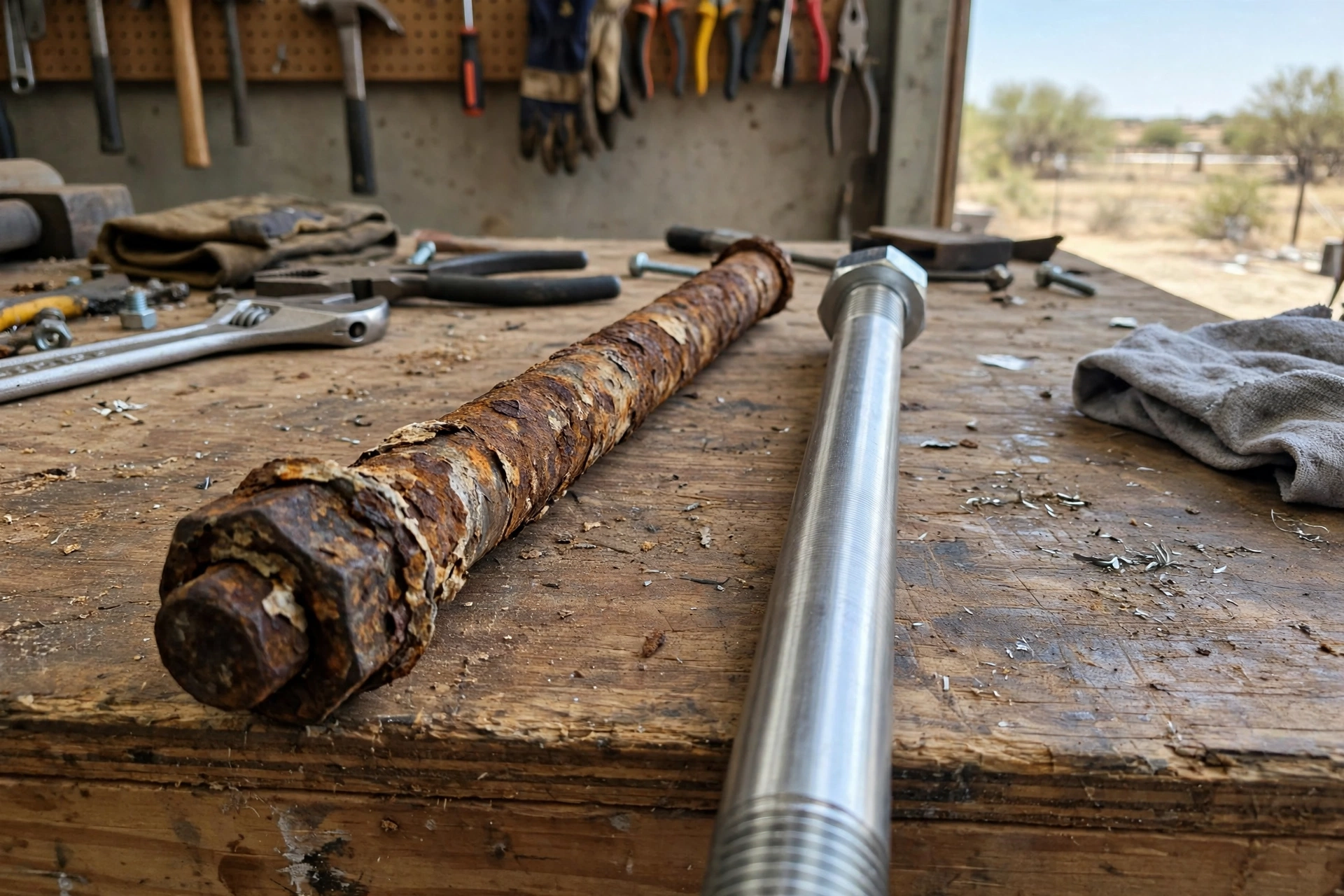
In Midland, hard water and high mineral content eat anode rods faster than in most of the country. Understanding what the rod does, how to check it, and when to replace it is one of the cheapest ways to extend your water heater's life. Pair this with our sediment flush guide for the complete maintenance picture.
Replacing a rod costs a fraction of replacing a tank, yet most tanks die with their original rod long gone. This is the highest-leverage maintenance in water heater ownership, and after reading this guide you will know exactly when yours needs attention.
Steel tanks rust. To slow that, manufacturers install a rod of more reactive metal, usually magnesium or aluminum, that corrodes preferentially. Corrosive forces in the water attack the rod instead of the tank lining, which keeps the steel intact far longer.
Once the rod is fully consumed, the tank has no protection left and corrosion turns on the steel itself. That is why a water heater can run fine for years and then fail fast: the rod was quietly doing its job until it was gone.
The rod works together with the glass lining inside the tank. The lining covers most of the steel, and the rod protects the tiny exposed spots at welds and fittings where the lining is thinnest. Neither defense is complete alone, which is why tanks have both and why the rod matters so much once the lining inevitably develops micro-cracks with age.

Dissolved minerals and water chemistry drive how fast an anode rod sacrifices itself. Midland's hard water, with its heavy calcium and magnesium load, creates an aggressive environment that can consume a standard magnesium rod in 2 to 4 years instead of the 4 to 6 years seen in soft-water regions.
Water softeners add another twist. Softened water is more conductive and can consume anode rods even faster, which surprises homeowners who installed a softener to protect their plumbing. If you have a softener, check the rod on the shorter end of the schedule.
Hot water use also plays a role. Households that use more hot water cycle more fresh, mineral-laden water through the tank, which consumes the rod faster. A large family in Midland can wear through a rod noticeably quicker than a single occupant, even with the same water supply. Usage and water chemistry multiply together.
Rotten egg smell in hot water is the classic symptom. It comes from bacteria reacting with a depleted magnesium rod, and it usually means the rod is past due. Rust-colored hot water is a later and more serious sign that the tank itself is corroding.
The sure way to know is a visual check. A technician pulls the rod from the top of the tank: if it is pitted down to the core wire or coated in calcium, it is done. Our water heater maintenance visits include this inspection.
The smartest time to check the rod is during your yearly flush, when the tank is already drained and cool. The two jobs share the same shutdown steps, so combining them saves a repeat visit. Ask your technician to pull the rod while the tank is empty and you will get the full picture in one appointment.
Replacement is straightforward for a professional: shut off water and power, relieve pressure, unscrew the old rod from the top of the tank, and thread in the new one. The job takes under an hour and costs far less than a new water heater.
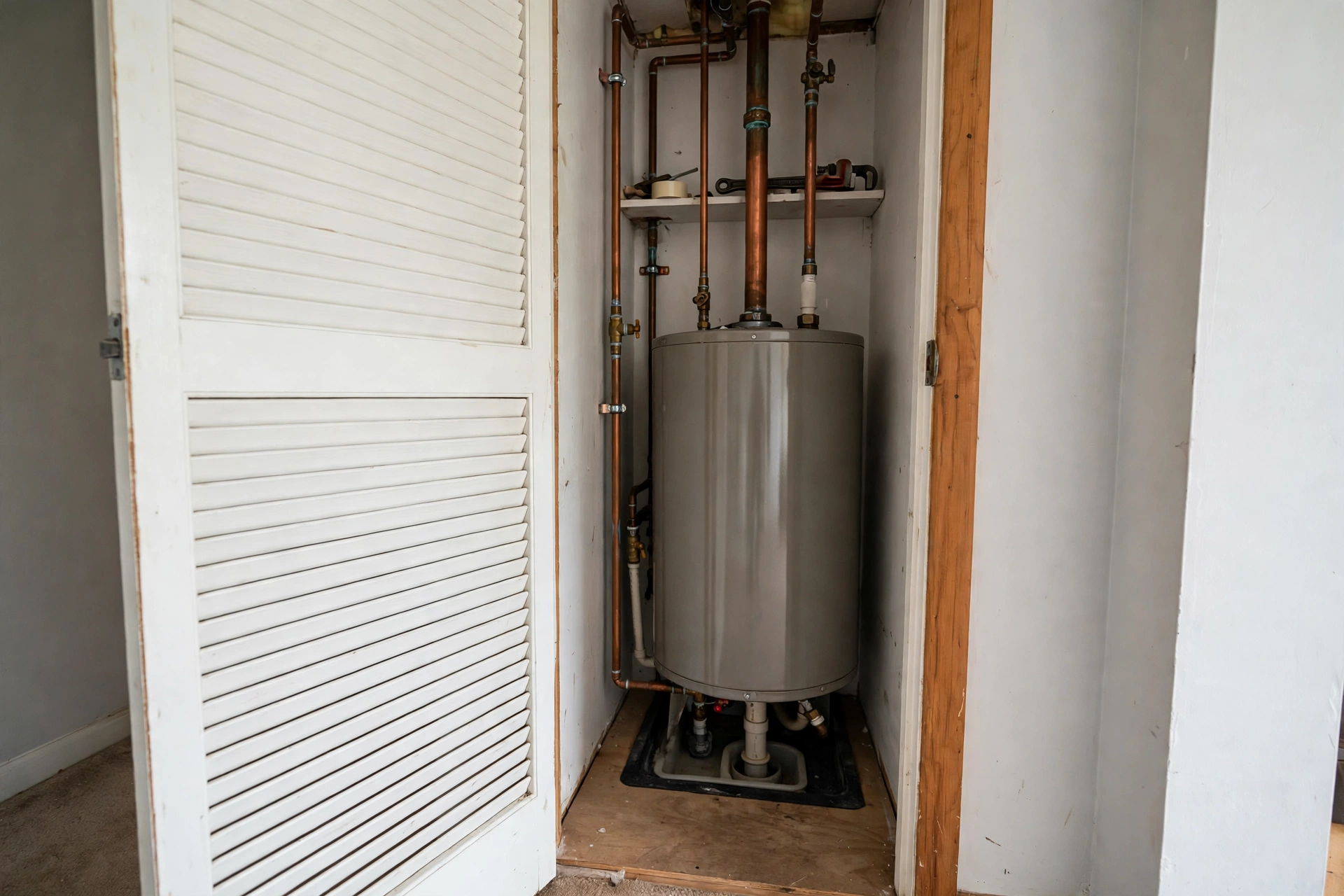
In tight closets with low headroom, a segmented flexible rod bends into place where a rigid rod will not fit. This matters in older Midland homes with cramped utility spaces, which our closet retrofit guide covers in detail.
Powered anode rods are an upgrade worth knowing about. Instead of sacrificing metal, they use a small electric current to protect the tank, and they never need replacement. They cost more up front but make sense for homeowners who plan to keep their tank a long time and never want to think about rods again.
Magnesium rods protect more aggressively and are the standard choice for most Midland tanks. Aluminum rods last longer and are sometimes chosen for smelly-water situations, though they protect slightly less vigorously.
For most homeowners the practical advice is simple: use magnesium unless your water has persistent odor issues, and replace whatever rod you have on schedule. The type matters less than the habit of checking it.
For persistent rotten-egg odor, a zinc-aluminum alloy rod often solves what magnesium cannot. The zinc changes the chemistry that feeds odor-causing bacteria. If you have battled sulfur smells through multiple magnesium rods, ask about the alloy version before assuming the water itself is the problem.
 Want Water Heater Guidance for Your Home?
Read the guide, then describe your water heater problem and we will help arrange the next step.
Check it every 2 to 3 years and expect replacement every 3 to 5 years in hard water. Homes with water softeners should check more often.
A rotten egg or sulfur smell in hot water only, not cold, usually traces back to a depleted rod reacting with water chemistry.
It is possible but the rod can be seized tight after years in place, and tight closet clearances complicate it. Many homeowners leave it to a technician.
If the rust is just starting, a new rod can slow further corrosion. If the tank is already rusting heavily, the damage is done and replacement is the real answer.
Many older Midland homes have water heater closets built for smaller, shorter units than what is sold today, w…
Learn more
A standard tank water heater in Midland typically lasts 8 to 12 years, while a tankless unit can run 15 to 20 …
Learn more
If your water heater is leaking, shut off the water supply to the tank, turn off power or gas, and drain it if…
Learn moreHot Water, HandledThe anode rod is a sacrificial metal rod inside your water heater that corrodes so the steel tank does not. In Midland's hard, mineral-heavy water, rods get consumed faster than the national average, often within 2 to 4 years. Checking the rod every couple of years and replacing it when the core wire shows through can add years to a tank's life.